A visit to Porter Creek Vineyards

We went to the Porter Creek vineyards last Thursday. They are located a little North of Santa Rosa in Sonoma County.

We wanted to catch the picking of their last grapes so we got up early and arrived at the winery around 6:30am. Alex Davis, vineyard manager and winemaker, then drove us to the vineyard where the picking was about to happen. Right after the sun rose the pickers came and about 5 bins were filled up with Syrah grapes. It was a pretty sight. And the pickers were impressively fast. Hopefully we have some decent footage of it all.

We were then able to witness the processing of the fruit, destemming and pump-overs of some previous harvest. We also toured other vineyards closer to the winery and got to taste most of their wines.

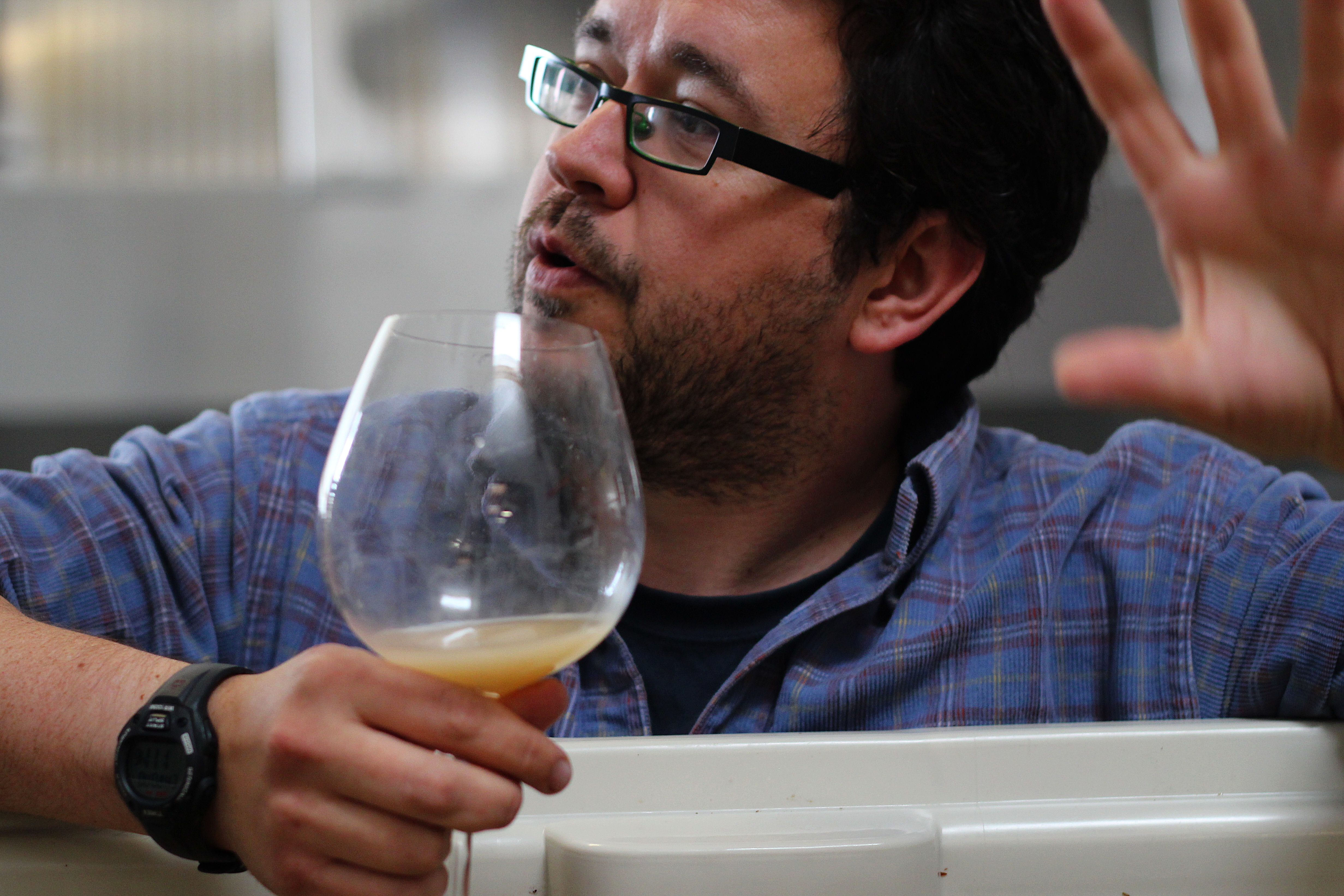
Towards the end of the afternoon, we asked Alex a few questions, and we did that on top of the Fiona Hill vineyard. See a short bit of that interview below.

Thanks a lot to Alex and the others at Porter Creek. It was a very good day.
Posted in interview, winery | Leave a comment

A visit to NPA

Santa Rosa. Friday early morning. Knocking on the door of NPA, the cool crew handing out wine in reusable klean kanteen bottles. We’re a little anxious because we feel those guys are especially relevant for our documentary.

We met Kevin Kelley (NPA’s founder and top dog) and Hardy Wallace (NPA’s joyal ambassador), talked a bit, before starting a quick tour of the premises. We introduced our project, things became clearer. They seemed to get it.

They offered us to do the interview on the first floor, because there’s more space, less noise. Bonus: those guys are into photography as well, so they even provided us with a spot light for improving the lighting for the interview. We asked Kevin questions about his philosophy and the reasons why he makes the wine the way he does. Good interview.

Then Hardy took us on a tour in the cellar, where he generously hopped from barrel to barrel, thiefing juice in our glasses and explaining genially why each wine was the best wine ever. A highlight of the tour was the pinot gris 2010. We thought it was amazing. Better than the 2009, with less nail polish and more nuts. Plus, they are still holding on to three barrels of Chardonnay 2009 still sitting on lees, the depth of which blew us away.

Hardy Wallace from NPA

Hardy Wallace from NPA

Before delving into something else, we were offered to stay for lunch — and what a tasty lunch that was! A couple of blind tastings followed, trying to figure out what the wine is and where it is from.

All in all, our NPA stop was a success. We talked about terroir, mother nature, while collecting quality footage. Big thanks to Kevin, Hardy and the crew!

Posted in interview, winery | Leave a comment

Natural Wine at Palate Press

Remy Charest’s latest article on palate press was quite interesting to us as it brings together a lot of the sources we’ve been reading in recent weeks.

Among many other things, Remy talks about the different definitions of natural wine. And reading his article made us think about what we should define as natural wine in our documentary. In fact, it made us realize that we should not aim to define natural wine specifically. We quite like the idea from Jamie Goode where:

In one sense, all wines are natural. Yet there is also a continuum of naturalness, ranging from the most industrial of wines towards the most extreme of natural wines. Generally, the world’s most interesting wines are made by winegrowers looking to work more naturally.

Once we show that there is such a continuum, the documentary will attempt to showcase the extreme end of naturalness. This extreme bit at the end of the scale — so different from what most winemakers practice — is an interesting topic. Hopefully it’s even film-worthy. Also, maybe presenting natural wine in this fashion is a good way to eschew controversy.

Another theme in Remy’s article is pragmatism. And that is definitely something that we want to emphasize in the film. Given the choice between adding a little sulphur and losing the grapes, it feels like a little sulphur is the obvious way to go. Same thing for dry-farming. Dry-farming is great and more sustainable but if your grapes are turning into raisins, a little water seems right. We appreciate common sense and we think this kind of attitude can help convince the audience to give natural wines a try.

Posted in natural wine | Leave a comment

A visit to Black Sears

We paid a visit to Ashley and Chris last Wednesday. They are both taking care of the Black Sears vineyard and winery on top of Howell Mountain at the northern tip of Napa Valley. They made us feel very welcome and were very patient with all of our questions. They even let us play in the vineyard where we spread hay in preparation for the rain.

Black Sears grow a little more than 20 acres of vines, mostly Zinfandel and Cabernet Sauvignon. They farm it organically and most of it is dry-farmed. We witnessed a pump-over as we toured the winery. We also went down to the cave and tasted their Zin and their Cab Sev straight from the barrel: om nom nom nom.

We interviewed both of them at the same time, on a picnic table outside the winery. It was a very good day for us. Thanks to Ashley and Chris!

Posted in interview, winery | Leave a comment

Wine Chemistry 101 on Sulfur

On Cory Cartwright’s blog, as a part of his “31 days of natural wine” series, the Bay area chemist Arjun Mendiratta has written an entertaining and dense post on sulfur.

Here are important points we want to remember from his post:

SO2 advantages

  • SO2 averts wine oxidation (which happens with the oxygen in the air)
  • SO2 does not kill saccharomyces cerevisiae (the important enzyme)

SO2 disadvantages

  • SO2 smells like burnt match;
  • SO2 can combine with certain flavor compounds present in wine and deprive them from their flavor;
  • SO2 reduces the microbial complexity of fermenting wine, which some believe that microbial complexity is directly related to flavor complexity;

Some Other Notes

  • even wines to which no SO2 has been added will nonetheless contain just a little SO2, since it is naturally produced during fermentation;
  • When SO2 is dissolved in water (and wine is 85% water), a small portion of it remains as SO2, but much of it reacts with water to form a mixture of sulfite, SO32-. and bisulfite HSO3-;
  • KHSO3, potassium bisulfite, a white powder, is easier to handle than the stinky SO2 gas;
  • H2S (hydrogen sulfide, aka rotten eggs) is a product of fermentation, and if it sticks around, it can turn into sulfides and mercaptans, which can be a problem
  • sulfides and mercaptans are heavier cousins of H2S. Sulfides and mercaptans are an intrinsic part of the flavor of many wines.  However, when present in excess, they can impart an overpowering odor akin to cooked cabbage;
Posted in chemistry, natural wine | Leave a comment

Wine Labels

It’s hard for me not to agree with this article about labels on wine bottles.

Transparency is a good thing. If consumers knew what goes into most of the bottles they buy, they might opt for more natural wine.

Posted in labelling, natural wine | Leave a comment

The Battle for Wine and Love

I finished reading The Battle for Wine and Love by Alice Feiring today. This book is a must-read on the topic of natural wine and although I ended up learning a lot more about Alice than I intended to, I thought the book made some good points. It certainly helped me think about what we want to portray in our documentary.

The author makes clear that she enjoyed natural wine from the beginning, at a time where she didn’t really understand anything about the winemaking process or about what makes a wine natural. Her palate guided her towards more natural wines and I thought that was encouraging. There are lots of arguments for keeping the winemaking process more natural. But in the end, if the taste is not appealing, most of the argumentation breaks down. She was not the only one either with a similar story. Other people we’ve talked to intuitively seek natural wine for its taste. Which is good.

It’s intriguing to me to hear that all wines taste the same. The author goes:

for the most part, wine is being reduced to the common denominator […] There will be scientists and consultants, who help create cookie-cutter wine for the mass palate.

This mass palate usually involves lots of oak, fruit bombs, and sugar. I’m not savvy enough to nod knowingly when she elaborates on this mass palate, but it certainly makes me curious. A part of me wants to go buy cases of Cabernet and Chardonnay from Napa and figure out what this commercial wine tastes like.

The author also emphasizes the battle for tradition being waged in the Old World. For instance, the obsession with regularity across vintages appears ludicrous:

The wines […] failed to get the DOC (Indicazione Geografica Tipica) mark of approval. This meant they could not use the term Chianti. […] The reason cited was lack of color! But they were told unofficially […] that if they added a color-fortifying agent the wines would pass!

Her section about Champagne was also very instructive to me — I’ve never been a Champagne drinker. She brings attention to the tradition being carried on by corporate brands with soulless vineyards sprayed over with pesticides and plowed so much that erosion becomes a problem.

It was a useful read, if a long-winded one.

Posted in book, natural wine | Leave a comment

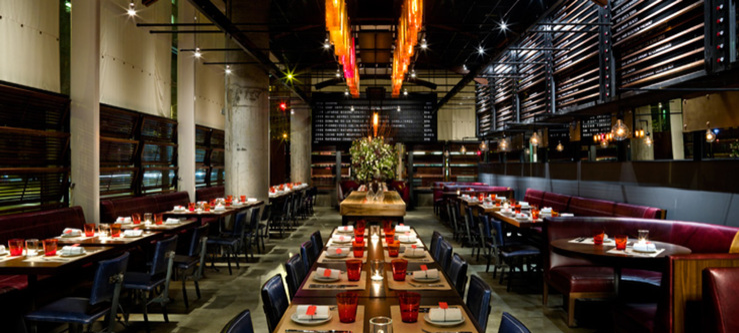
Feeling Classy @ RN74

Tonight was a bit expensive. Wine tastings were about twice as expensive as what we are used to in San Francisco. Very decent wine menu, although not that many choices from California. France was king.

Details at RN74 are important. Menus folded in red leather, modern wood furniture, carefully picked and matching color tones around you. With no surprise, the aesthetics of the plate is given high importance. And no disappointment, what the plate offers reflects its image: delicate and delicious.

In other words: pricey, classy, but yummy.


Classy @ Rn74, SF

Classy @ Rn74, SF


Riesling, Tatomer ‘kick-on-ranch’ Santa Barbara 2008 (white)

  • nose: noticeable petroleum, nice citric acidity, pineapple
  • flavor of some alcohol flambee on mid-palate
  • fresh and smooth finish, charming, even teasing
  • 3/5 (strong)

Chardonnay, Parr ‘Charles Heintz’ Cuvee Rn74, Sonoma Coast 2008 (white)

  • full of oak, herbaceous
  • quickly syrupy in mouth
  • sugar stays
  • 2/5

Gamay, Thivin Cotes-de-Brouilly, Beaujolais 1993 (red)

  • earthy muddy, caramelized sugar
  • tastes velvet, blueberry jam
  • earthy and sweet finish
  • 4/5. Quite something to realize this juice is 17 years old!

Syrah, Copain Tous Ensemble, Anderson Valley 2007 (red)

  • chocolate on the nose
  • very sweet blueberry jam
  • 3/5
Posted in San Francisco, wine tasting | Leave a comment

The Origins of Natural Wine

Where does it come from? Here is snippet from an article from Jon Bonné:

The natural wine movement grew out of a group of French vintners disillusioned with the prevalence of chemical farming and the loss, in their view, of the taste of place in wine. By growing healthier grapes, and doing less to them, the thinking went, they could recapture wine’s uniqueness.

Posted in natural wine | Leave a comment

Take II @ Arlequin

We went back to Arlequin last Friday. The objective was to interview Ian, the wine buyer of the place. We’re quite satisfied with the result and we will craft a little capsule about Ian’s artsy approach to his trade.

As a big bonus, Ian and Brett generously invited us to taste quite a few bottles. The two highlights are undoubtedly:

Salinia, Pinot Noir 2006 (red)

  • brown color
  • sweaty saddle, cherry
  • pepper, velvet, spices
  • extremely long
  • 5/5. Yeah, no typo. One of the best wines I’ve ever had!

Gevrey-Chambertin, Pinot Noir, Philippe Pacalet 2006 (red)

  • brown color, bitterness on mid-palate
  • sticky tannins, filling the mouth
  • long long finish, retro-olfaction of poached pears
  • 4/5
Posted in interview, San Francisco, wine tasting | Leave a comment